Graduate Student Profiles

Image
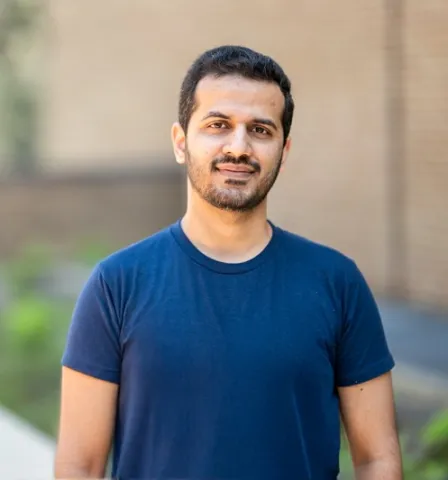
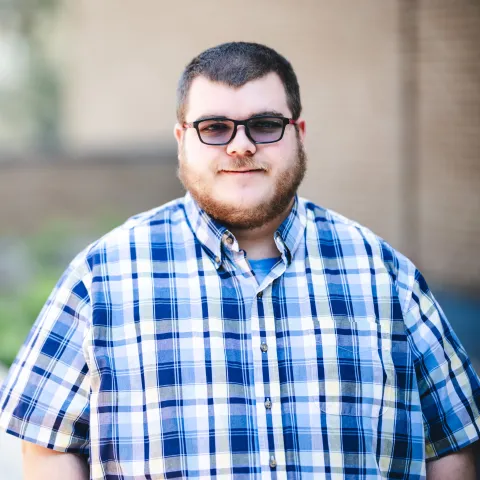
Graduate student Fareed Ul Haq Khan standing in front of brick building wearing a blue t-shirt.

Fareed ulHaq Khan

Ph.D. Student
fak523@lehigh.edu

Office Location: Mudd 567

Area of Specialization: Inorganic Chemistry

My research focuses on identifying the mechanism of Supercapacitive Swing Adsorption (SSA) for carbon dioxide capture. Using in-situ spectroscopic techniques and titration of charged electrodes, I aim to study the underlying processes that drive SSA. This understanding will enable improvements in CO₂ sorption capacity and make the technology more practical and scalable.

Image
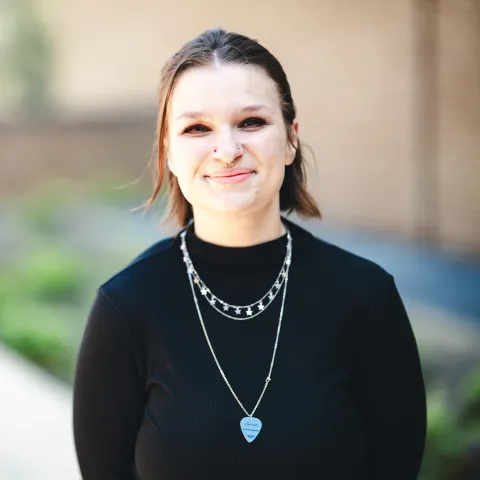
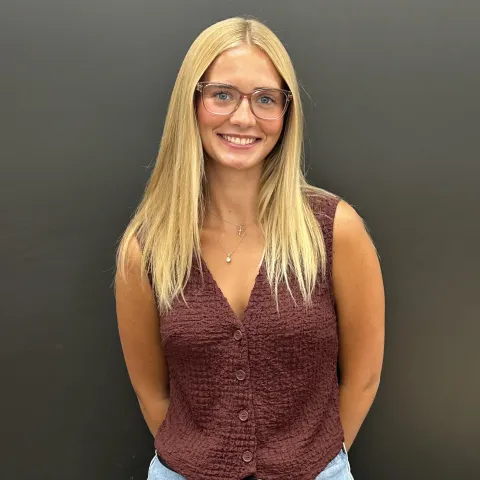
Leah Knepper wearing a black shirt and necklaces smiling for her headshot outside.

Leah Knepper

Ph.D. Student
lek320@lehigh.edu

Office Location: Mudd 648

Area of Specialization: Biochemistry

I am a graduate student in Damien Thévenin’s lab. Previously published work focused on an immunotherapy using a fusion of a pH-sensitive peptide and a nanobody to target cancer cells in their acidic environment. The targeted cancer cells displayed the nanobody on their surface such that they were subsequently destroyed by natural killer cells, while sparing healthy cells at a neutral pH. Current work is aimed at expressing and purifying the transmembrane and intracellular domains of a class of membrane proteins and reconstituting them in nanodiscs as a lipid membrane mimic. Further experiments will be conducted in order to understand the structure and activity of the reconstituted proteins. In my free time, I enjoy music, playing the guitar, ukulele, and piano, crocheting, reading, and walking on nature trails.

Image
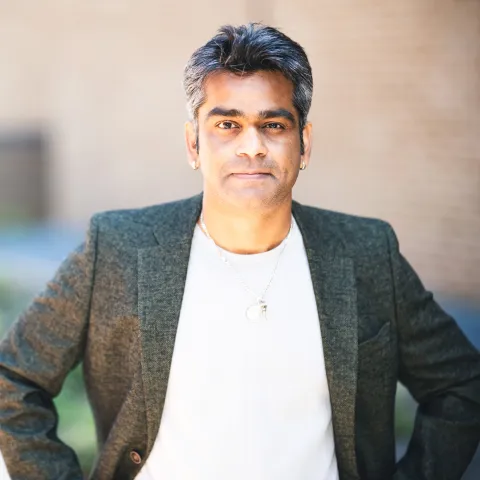
Bharath Kumar standing in front of a brick building for his headshot wearing a white shirt and suit jacket.

Bharath Kumar

Ph.D. Student
bhs324@lehigh.edu

Office Location: Sinclair 304

Area of Specialization: Spectroscopy, Atomic Force Microscopy

I am interested in exploring the role of atomic force microscopy (AFM) variants to decipher the chemical, electrical, and mechanical properties of materials such as macromolecules, heterogeneous materials, and nanostructures.

Image
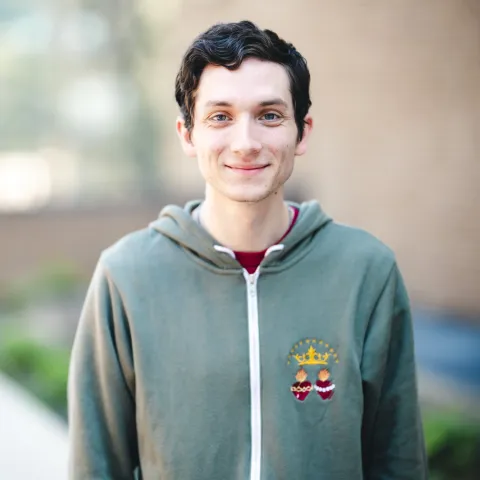
Nicholas Manidis standing in front of a brick building for his headshot wearing a green zip up hoodie.

Nicholas Manidis

Ph.D. Student
nim424@lehigh.edu

Office Location: Mudd 657

Area of Specialization: Bioanalytical Chemistry

I am currently a graduate student working under Dr. Nathan Wittenberg. My research focuses on the chemistry of lipid bilayers, specifically outer membrane vesicles of gram-negative bacteria and their role in antibiotic resistance (an increasing dire issue). By understanding how bacteria defend against antimicrobial peptides using analytical methods, I hope to pave the way for the discovery and testing of new antibiotics. My outside interest is in theology.

Image
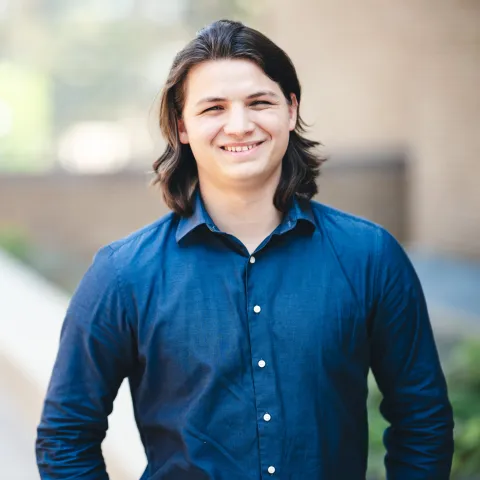
Luc Mauro standing in front of a brick building wearing a blue button-up shirt for his headshot.

Luc Mauro

Ph.D. Student
lam422@lehigh.edu

Office Location: Mudd 423

Area of Specialization: Organometallic Chemistry

I am motivated by exploring the role of chemistry in the environment and collaborating with others. My research interests are in the catalyst development for recycling inert high-global-warming-potential hydrofluorocarbon refrigerants.

Image
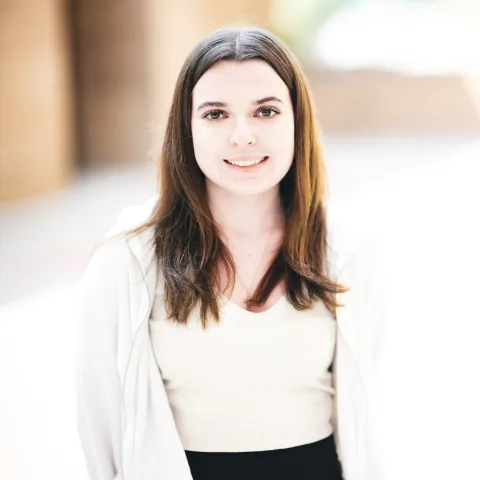
Adeyemi Odudimu wearing a black shirt and ivory jacket smiling for her headshot

Adeyemi Odudimu

Ph.D. Student
ado219@lehigh.edu

Office Location: Mudd 657

Area of Specialization: Bioanalytical Chemistry and Biomembrame

I am a 5th-year Ph.D. Candidate at Wittenberg's lab, where I use cell membrane model systems to study the molecular factors that underlie Myelin-associated glycoprotein (MAG) interaction, specifically, I explore the role played by cholesterol and/or lipid rafts on MAG-Gangliosides interaction.

Image
Patricia Olsen wearing a white top and white zip up smiling for her headshot in front of a brick building.

Patricia Olsen

Ph.D. Student
pro325@lehigh.edu

Office Location: Mudd 643

Area of Specialization: Biochemistry

Reactive oxygen species, as well as exposure to ionizing radiation and environmental
stresses are among the main sources that lead to DNA double-strand breaks (DSBs).
DSBs are considered the most toxic form of DNA damage and rely upon four major
repair pathways. Physiologically relevant DSBs often have chemical modifications that
make them difficult to repair by direct ligation or the non-homologous end-joining
(NHEJ) repair pathway. My research focuses on designing reporter systems and using
fluorescence- and luminescence-based functional assays to measure repair efficiency
and accuracy of complex DSBs in cells, as well as how break complexity influences
repair pathway choice.


Image
Anthony Paolo standing in front of a brick building for his headshot wearing a blue shirt.

Anthony Paolo

Ph.D. Student
anp724@lehigh.edu

Office Location: Mudd 522

Area of Specialization: Organometallic Chemistry

My primary research areas are organometallic and fluorine chemistry. In particular, I am interested in developing new metal-mediated synthetic methodologies to functionalize high global warming potential (GWP) hydrofluorocarbon (HFC) refrigerants. My current work involves catalytic sp3 C-H activation of HFCs with the aim of producing value-added fluorinated intermediates. I am also interested in mechanistic evaluation of these reactions to better understand the unique behavior of HFCs bound to transition metal complexes.

Image
Madison Pellerito wearing a white Lehigh t-shirt and glasses smiling for her headshot in front of a brick building.

Madison Pellerito

Ph.D. Student
mapb25@lehigh.edu

Office Location: Mudd 643

Area of Specialization: Biochemistry

My research focuses on developing reporter plasmids and functional assays to measure
single-stranded DNA gap repair. In cancers, such as glioblastoma, intrinsic and
acquired resistance to treatment results in the proliferation of treatment-resistant cells.
This proliferation is accelerated by translesion synthesis repair (TLS), which allows
cancerous cells to tolerate unrepaired DNA damage and resist chemotherapy. I am
developing quantitative functional assays for measuring TLS capacity in live cancerous
cells, providing information on how mutagenic DNA repair pathways influence and
contribute to treatment resistance.


Image
Jordan Polvere wearing a striped hooded zip up jacket smiling outside for his headshot.

Jordan Polvere

Ph.D. Student
jop324@lehigh.edu

Office Location: Mudd 573

Area of Specialization: Solid-State Transient Absorption Spectroscopy

I am primarily interested in solar cells due to their potential environmental and economic benefits. I work collaboratively with synthetic chemists, studying complete or partial solar cell stacks to grant insight into rational modifications to improve efficiency. My goal in studying charge transfer dynamics is to help push us toward a future where environmentally friendly energy generation is also efficient and inexpensive, allowing the technology to be deployed at scale.