
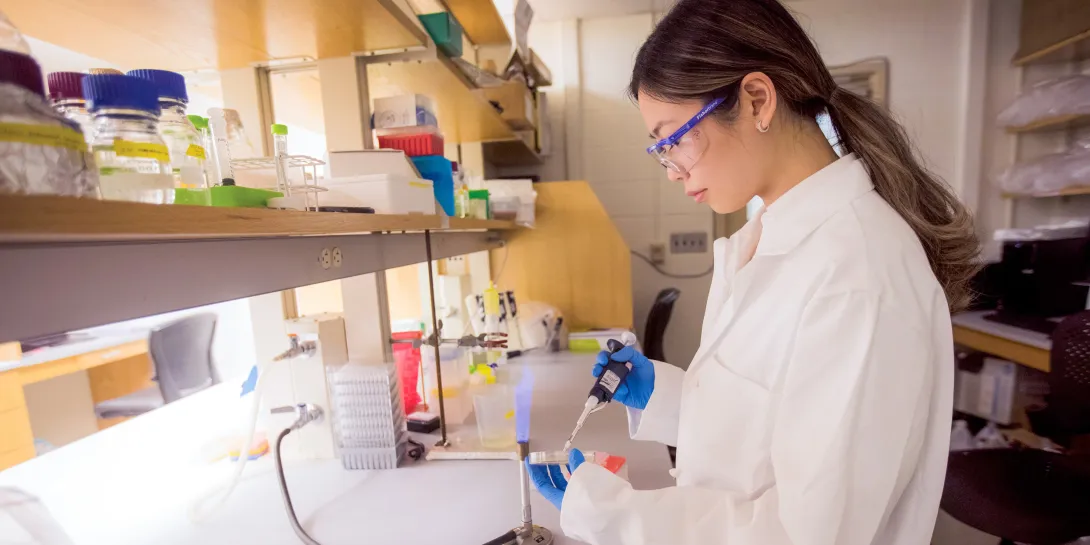
Chemistry undergraduates can get involved in research in a variety of ways, from early course-based experiences to mentored work in faculty laboratories. Many introductory classes include lab components that emphasize discovery and experimental thinking rather than simply following set procedures. As students move into advanced coursework, laboratory classes typically incorporate more complex methods, modern analytical tools, and multi-week projects that resemble authentic research problems.
Students who want deeper involvement can join a research group and contribute to ongoing work under the supervision of a faculty mentor. In these settings, undergraduates often collaborate with graduate students and other lab members while developing technical skills and learning how research groups operate day to day. Students often begin by assisting with ongoing projects, learning core lab techniques, or taking on a writing- or literature-based project as they build experience.
Getting Started: When and How to Contact Faculty
Students may begin research as early as their first year, especially if they have a strong interest and availability. However, many students are advised to wait until the second semester of the first year or the third semester (fall of the sophomore year), when they have completed foundational coursework and feel more comfortable in a laboratory setting.
To identify potential mentors, students can review faculty research descriptions on the department website, attend departmental seminars or events, and speak with instructors in courses they enjoy. Once a student finds one or more labs that match their interests, they should email the faculty member to introduce themselves and request a meeting. In that message, it’s helpful to include a brief statement of research interests, relevant coursework or lab experience, and the type of involvement they are seeking (volunteer, independent study, honors, summer research, etc.). Reaching out before preregistration is especially helpful, since faculty can discuss openings, expectations, and how research might fit into a student’s upcoming schedule.
Students should also be mindful of the time commitment involved. As a general guideline, each registered research credit typically corresponds to approximately three hours of work per week, and students are expected to plan their schedules accordingly. Expectations may vary by research group and project and should be discussed with the faculty mentor in advance.
Department Honors Thesis
The Honors Thesis program offers students a meaningful way to bring together what they have learned and accomplished during their undergraduate studies. Requirements and timelines are described on the department’s Honors page. In brief, students pursuing Honors typically complete six (6) credit hours of 300-level research, write a report summarizing their work, and present their findings to a three-person committee.